
Serifos, Unfolded
In Greek mythology, it is said that Serifos is where Perseus grew up, returning with Medusa’s head to save his mother from the unwanted attentions of Polydectes, and where the Cyclopes were believed to live. Myth has always sat comfortably alongside reality on this island.
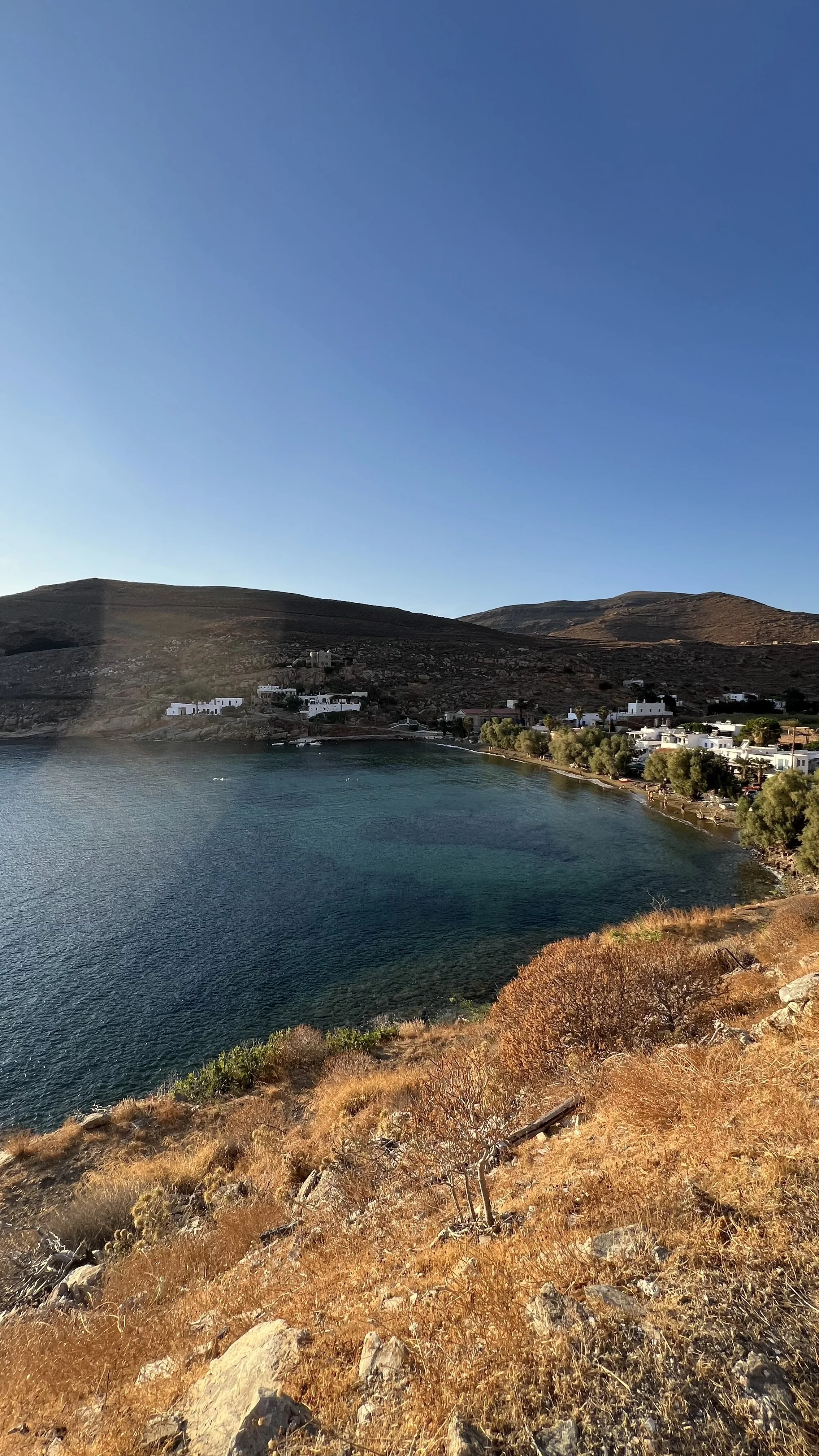
Craggy and uncompromising, Serifos has a raw, rugged beauty all its own. Formed from iron and granite, it is the rockiest island in the Cyclades—arid yet striking, with steep mountains that plunge dramatically into wide, ultramarine bays. The more you uncover, the more surprising it becomes that this island has remained largely untouched compared to its better-known neighbors, Mykonos and Santorini. And that is precisely its allure.
Without an airport and bypassed by inter-island ferry routes, Serifos has stayed blissfully off the mainstream tourist trail. Yet it is far from inaccessible. Just 65 nautical miles from Piraeus, a high-speed ferry brings you to Livadi in under three hours—where your first swim in crystal-clear waters often happens within minutes of arrival.
Beaches & Sea
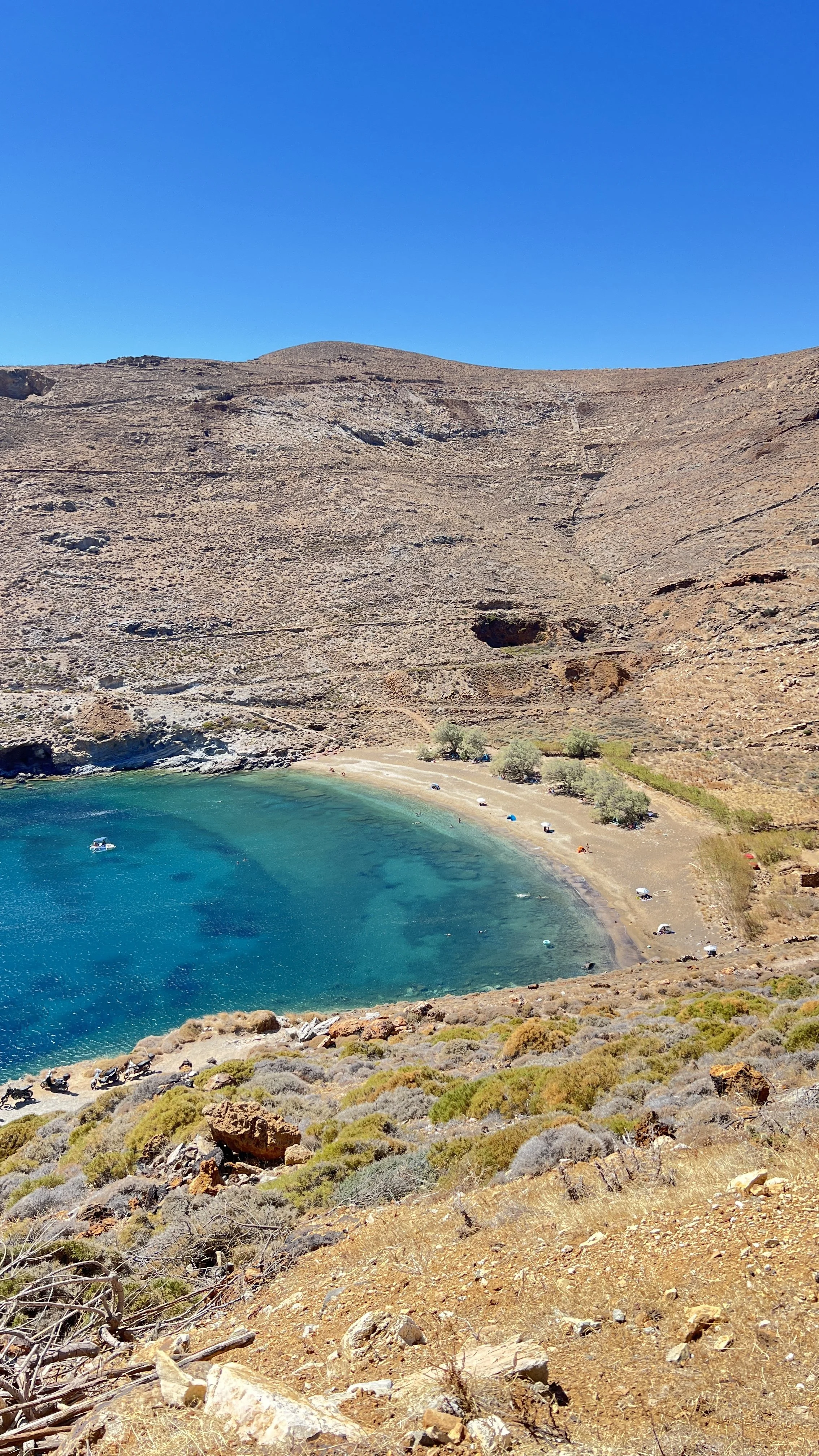
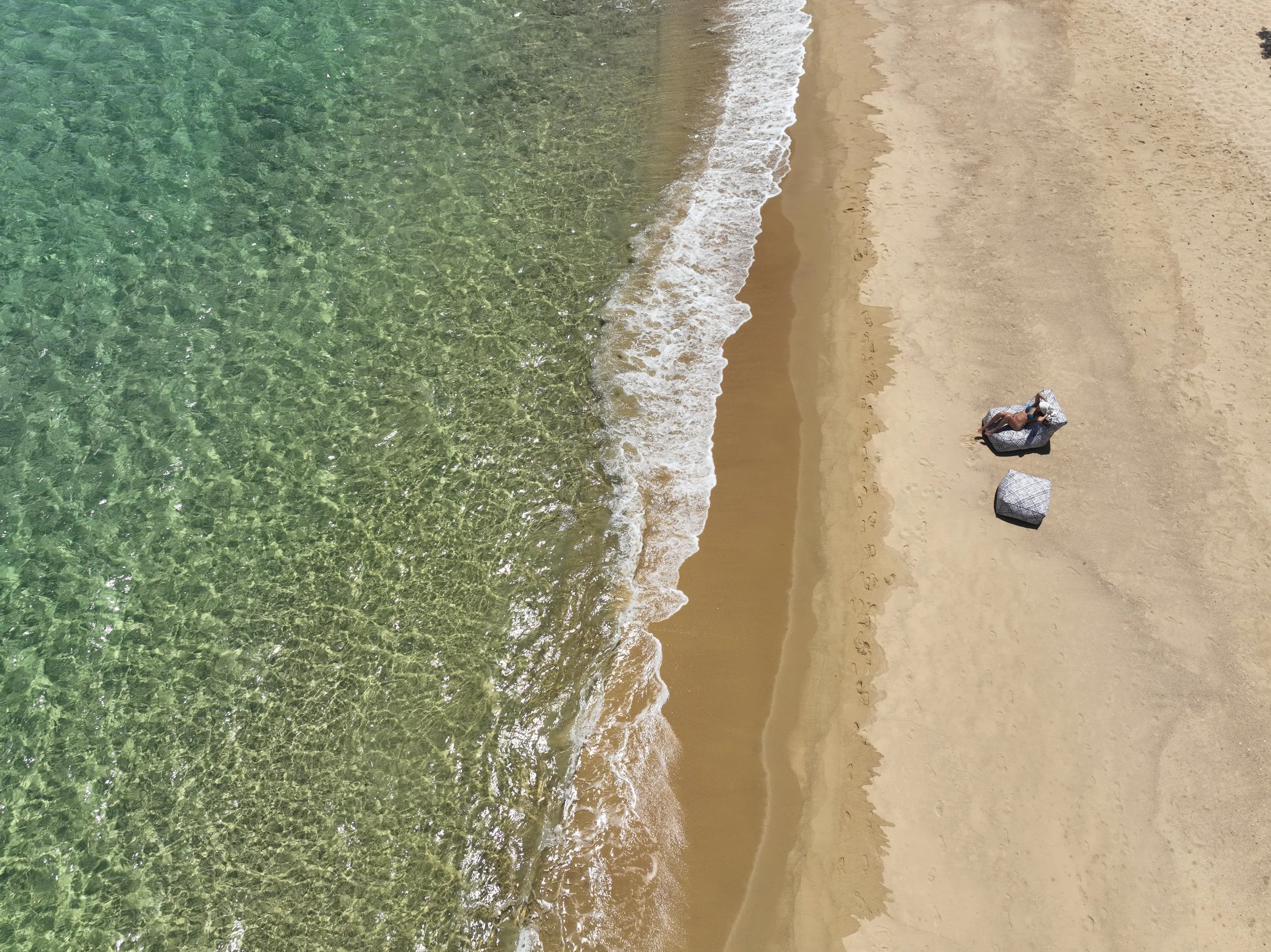
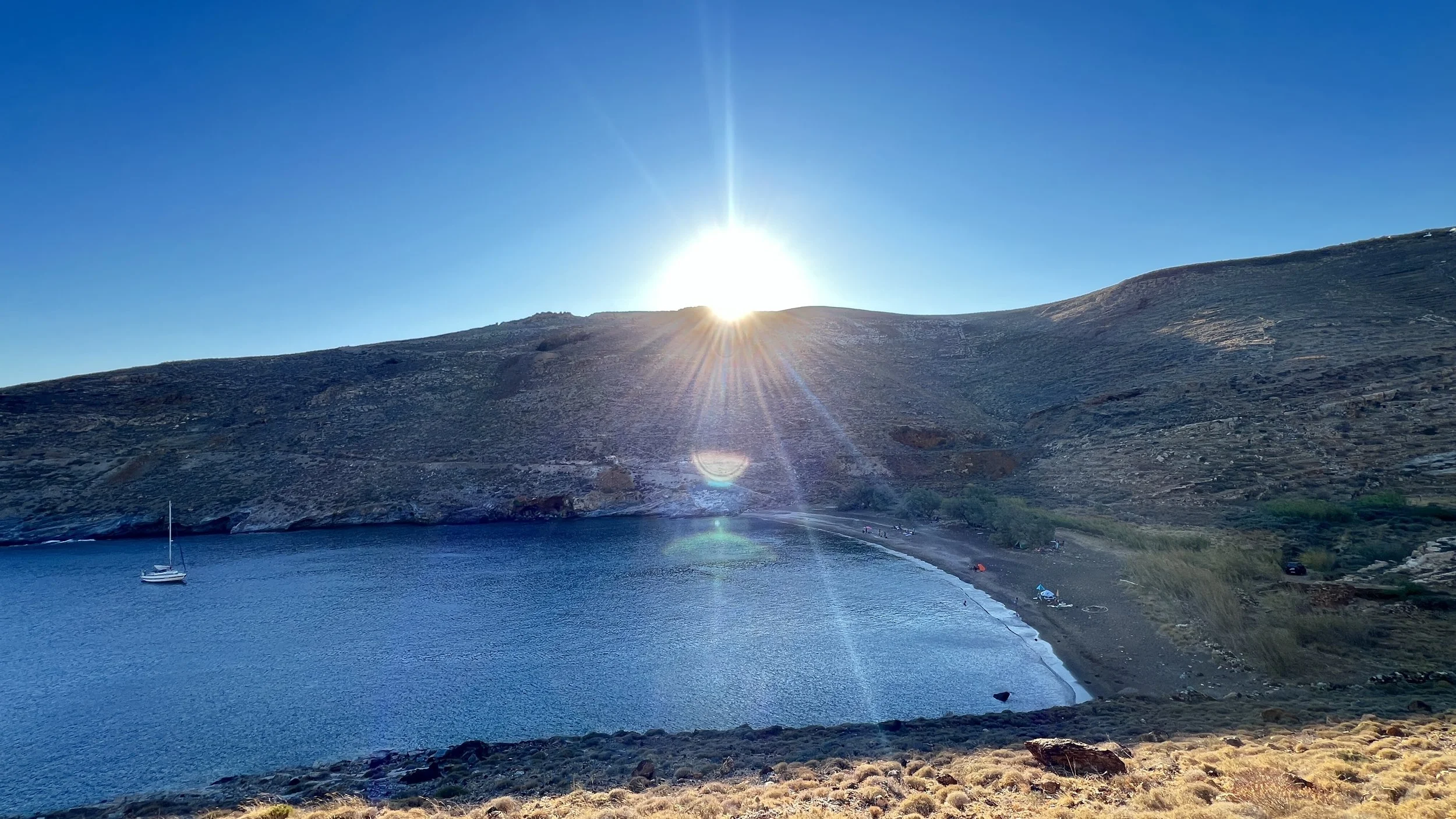
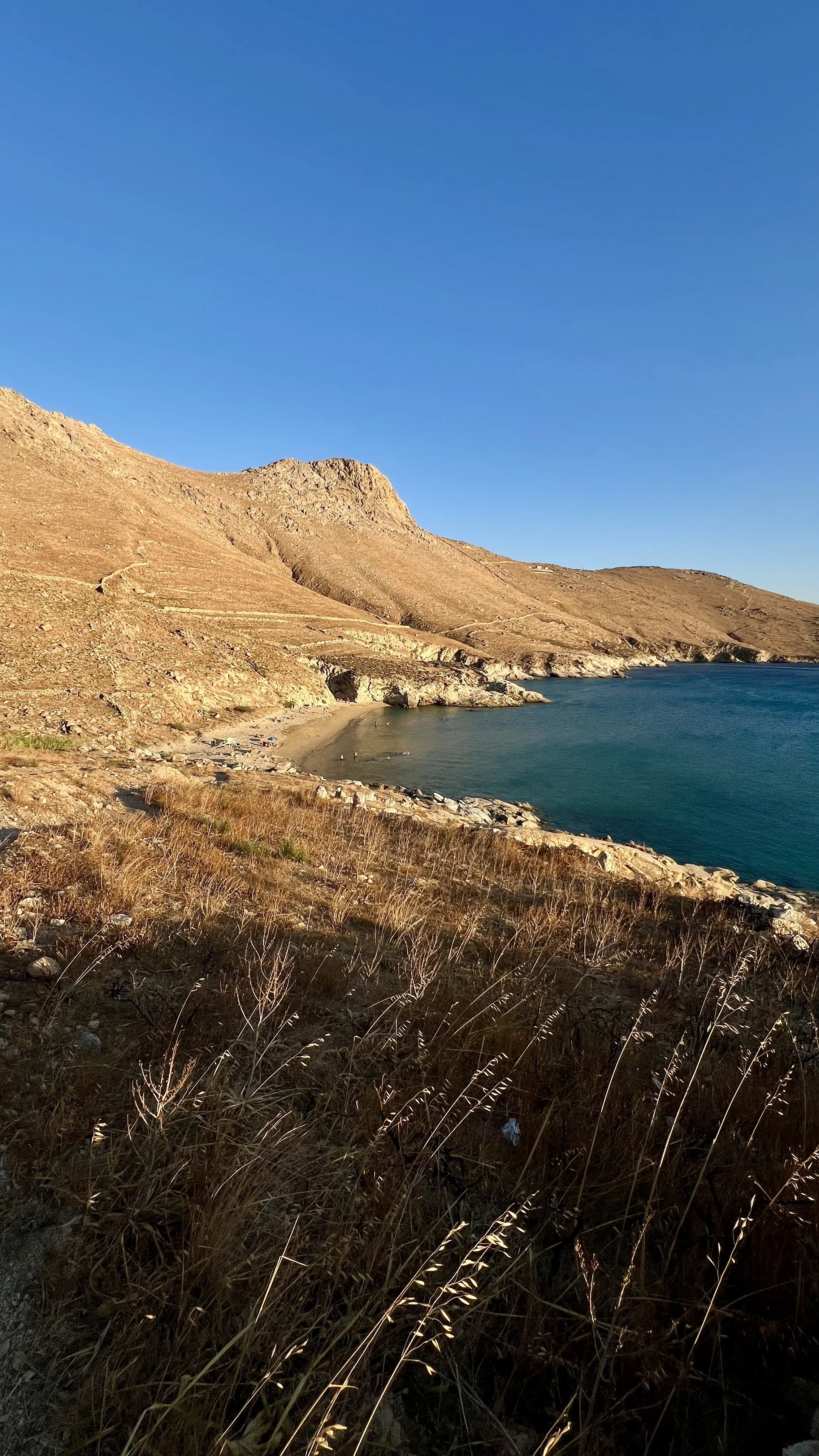
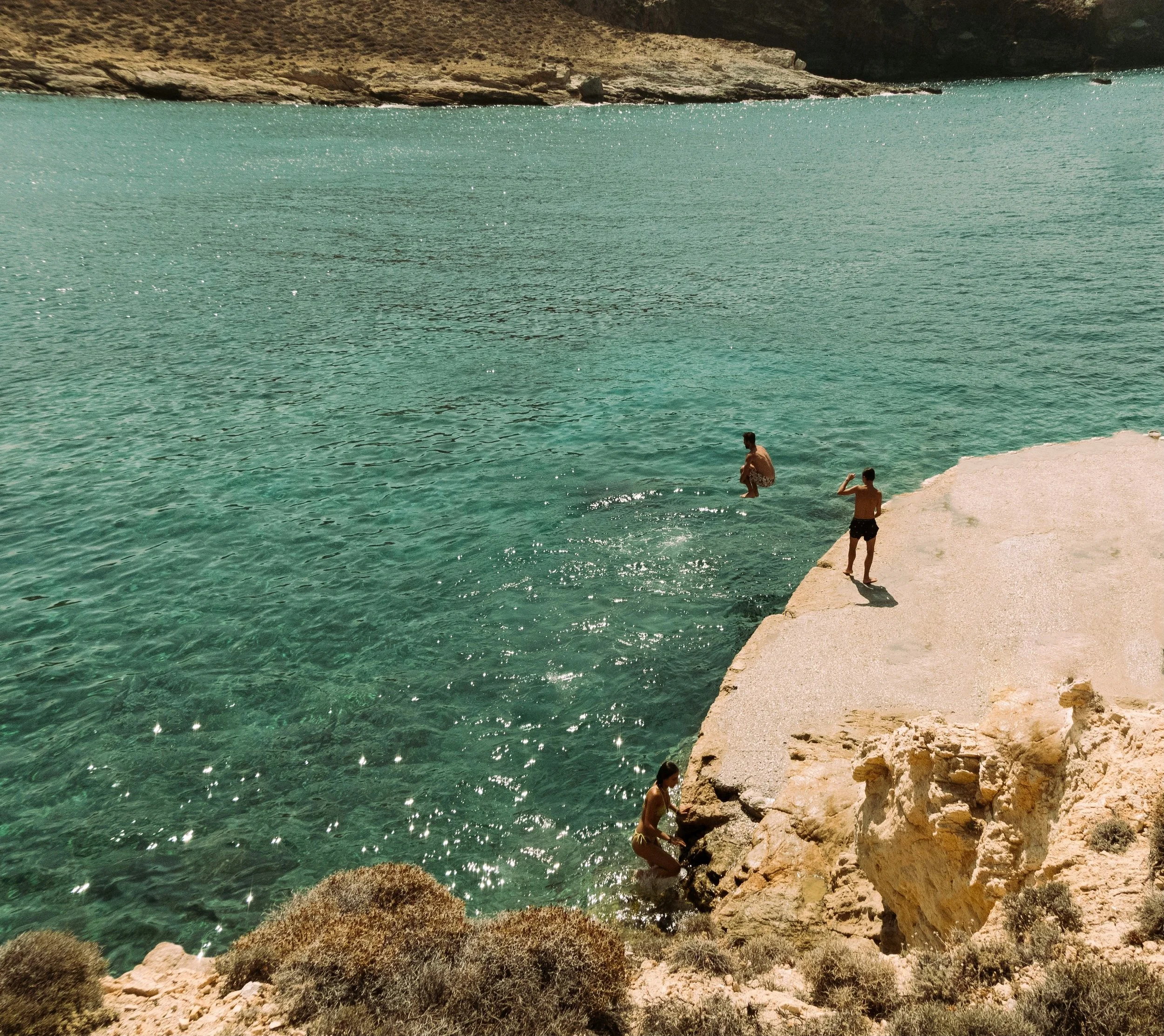
Serifos’ rugged terrain sets the stage for an extraordinary collection of beaches. Some are rocky and wild, others softly curved with golden sand, but all share waters of exceptional clarity.
Many beaches can be reached by car, others by footpaths or by boat, rewarding those willing to explore. For the most part, they remain uncrowded and unspoiled—places where the day is defined by swimming, sun-warmed stone, and the quiet rhythm of the sea. Each bay feels distinct, shaped by wind, rock, and light.
Villages & Culture
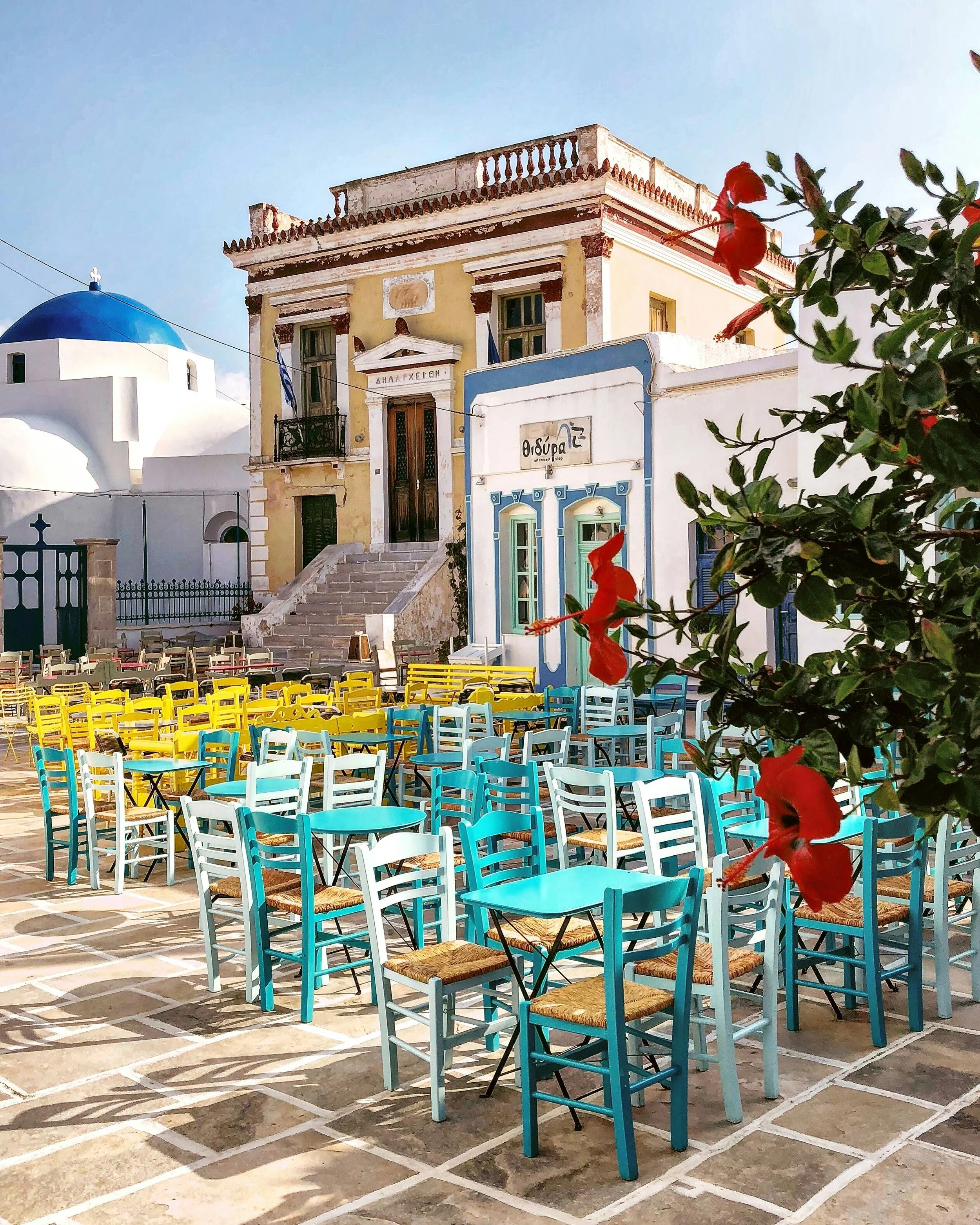
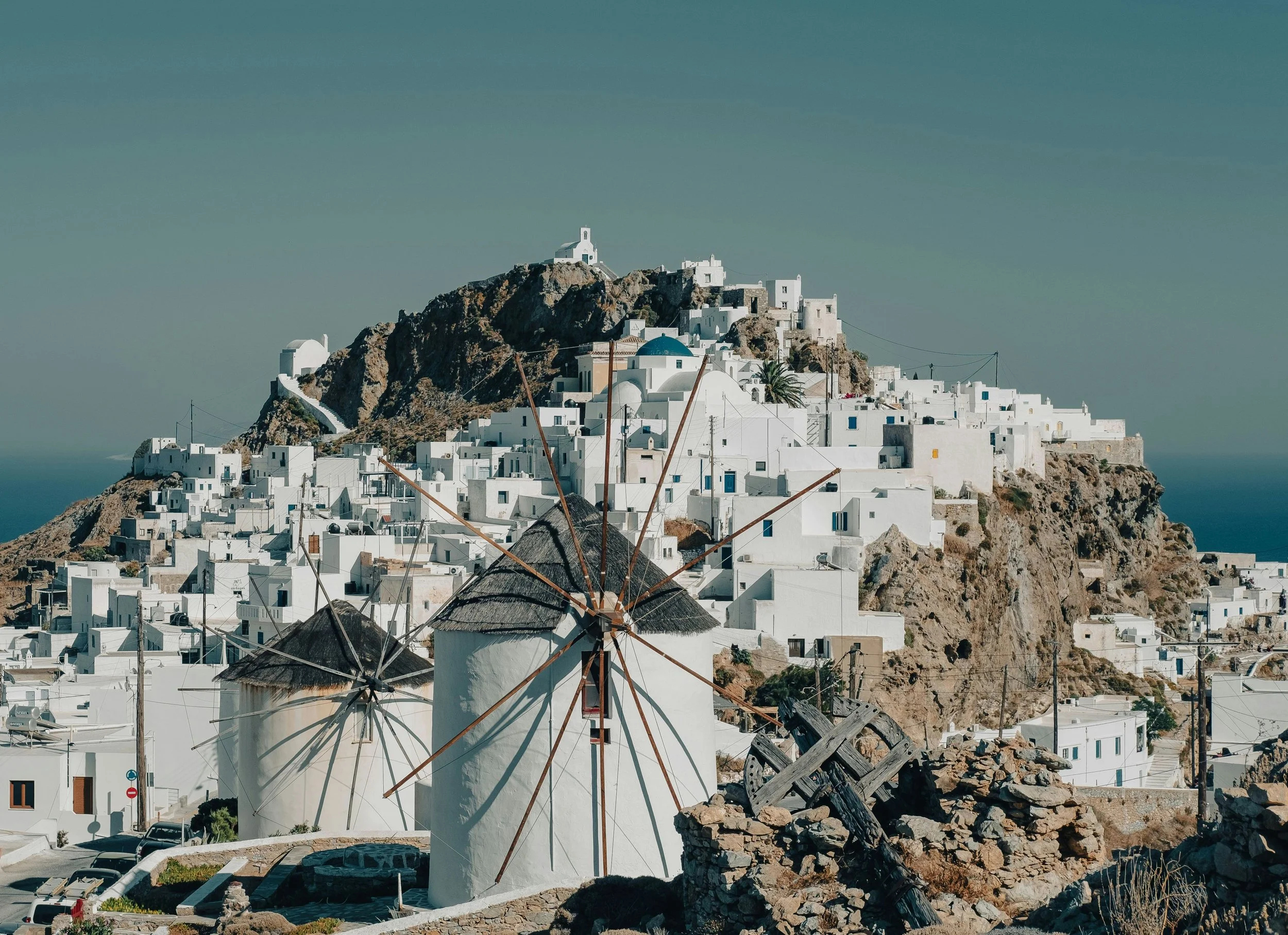
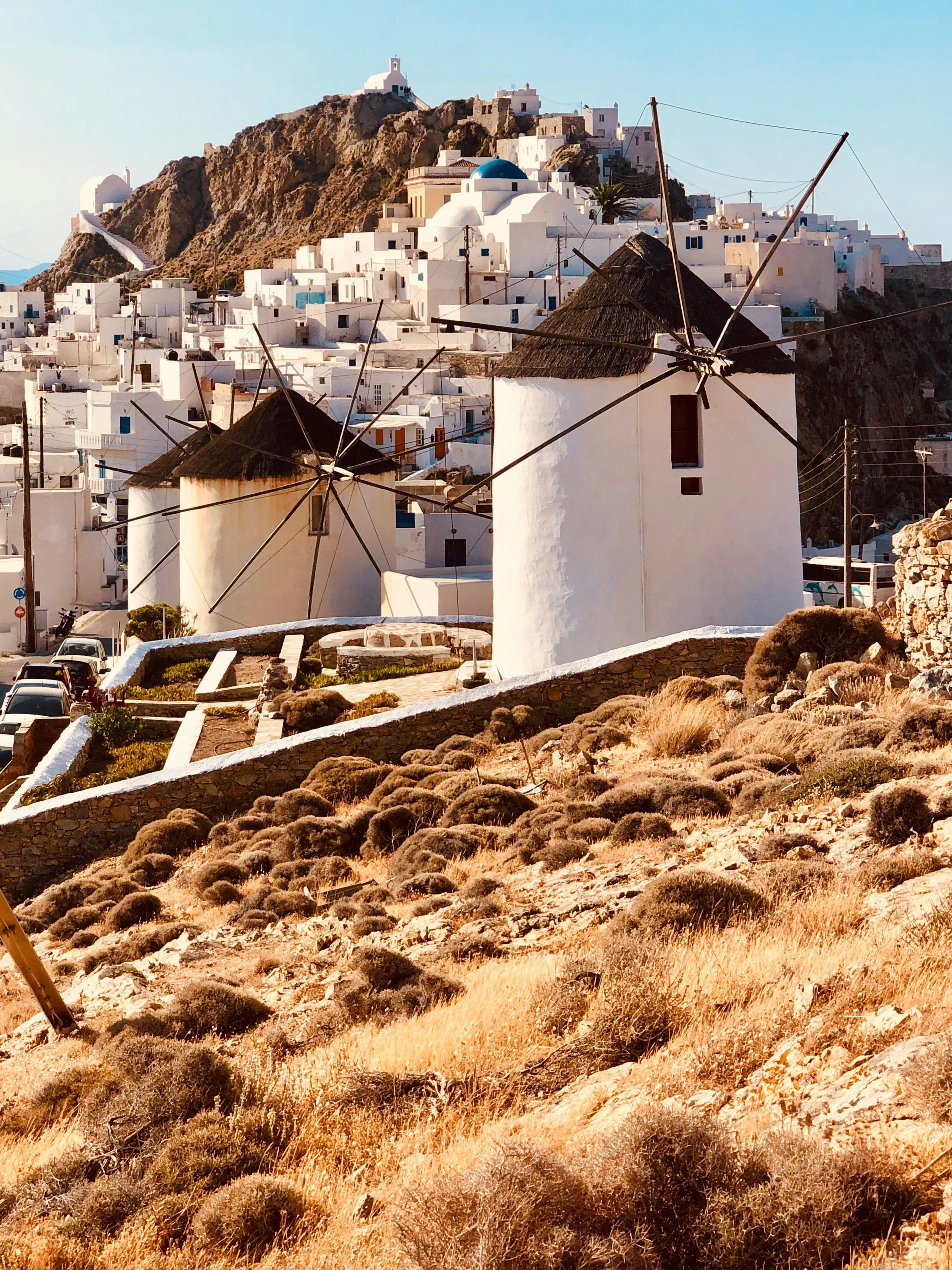
Perched high above the sea, Chora is the quiet heart of Serifos. Whitewashed houses cluster along the ridge, unfolding into narrow alleys, small squares, and viewpoints that open suddenly onto vast horizons. Life here moves at an unhurried pace—locals gathering in kafeneia, evenings marked by the soft glow of lights and the sound of conversation carried by the wind.
Beyond Chora, small villages are scattered across the island, each with its own modest rhythm, shaped by proximity to the land and the sea.
Culture on Serifos is not curated or performative; it is lived. It exists in chapels perched on hillsides, in seasonal festivals, in stories passed down quietly, and in the enduring presence of an island that has learned to value continuity over change.
Gastronomy
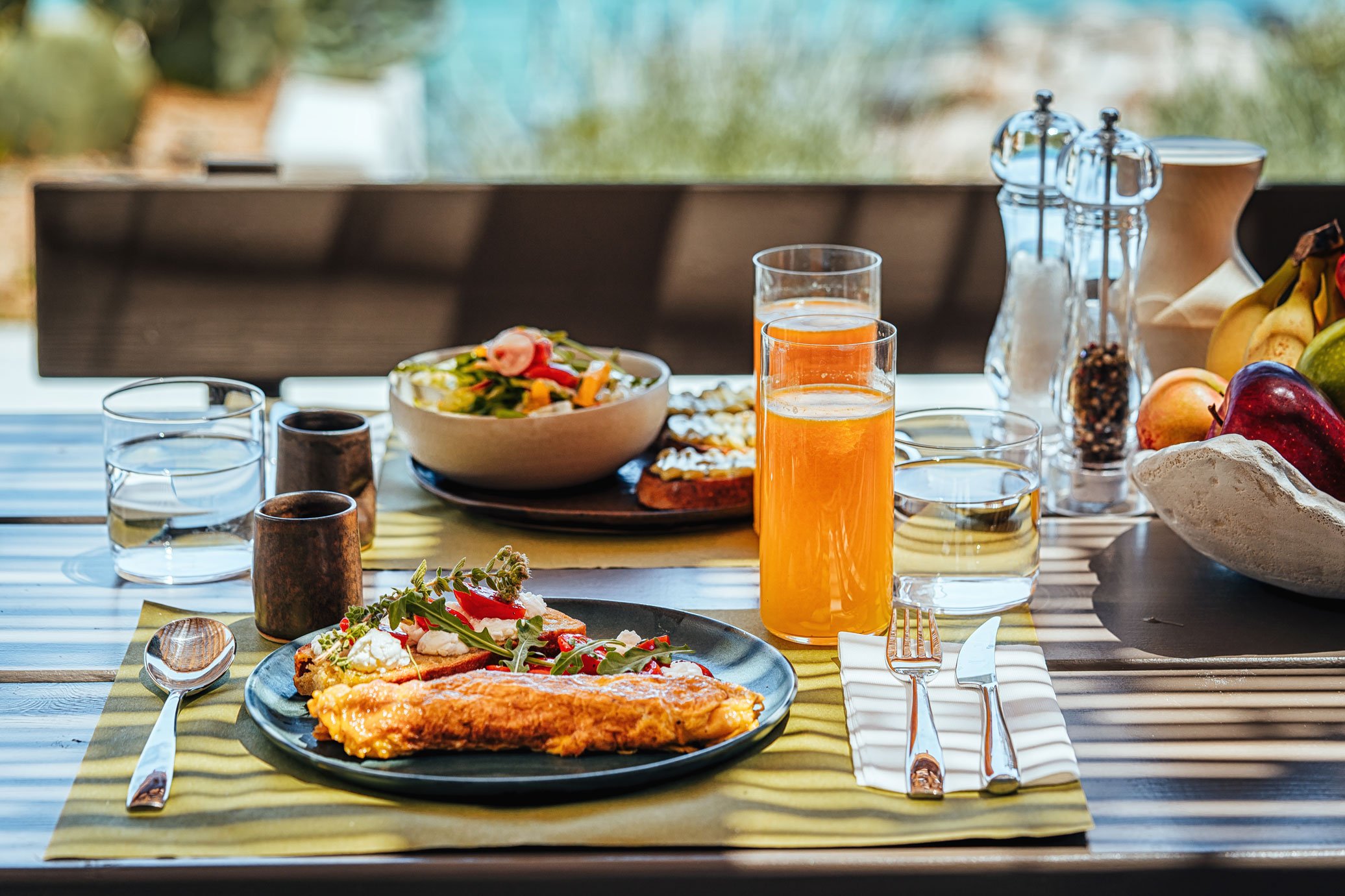
Food on Serifos is simple, honest, and deeply connected to place. Long lunches unfold slowly in rustic tavernas, often right by the water, where fresh seafood, local cheeses, and seasonal produce take center stage.
This is not an island of culinary excess or trend-driven dining. Instead, meals are generous and unpretentious, meant to be shared and lingered over. Eating on Serifos is less about the menu and more about the setting, the company, and the unhurried passing of time.
Nature & Hiking
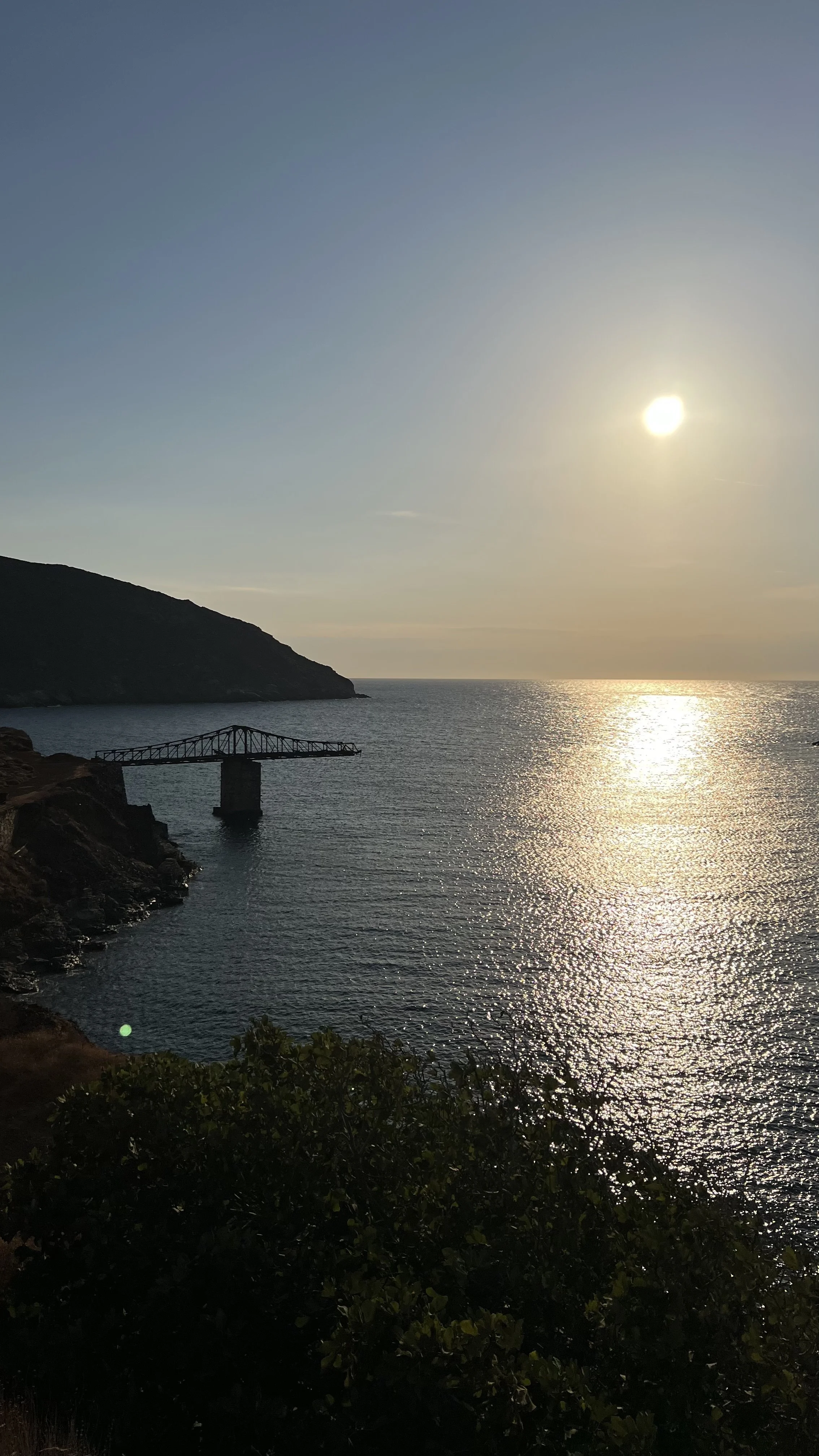
An extensive network of old paths crisscrosses Serifos, once used by miners, shepherds, and villagers to move across the island. Today, these routes connect beaches, chapels, abandoned mines, and panoramic viewpoints.
Walking these paths reveals a quieter side of the island—stone walls, forgotten structures, and traces of lives shaped by hard work and isolation. Hiking on Serifos is not about conquering distance, but about discovery, perspective, and immersion in the island’s elemental character.
Serifos is the kind of Greek island many believe no longer exists. A place of crystalline waters and rugged land, of beachside tavernas and starlit dinners, of raw beauty and understated charm. It is an island that stays with you—not because it tries to impress, but because it never does.
We’d love to hear from you
Seriphos Estate
Agios Ioannis 84005 Serifos, Cyclades
Tel.: +30 6946656614
Email: welcome@be-my-guest.gr